
- MPA Handbook
- Chapter One
Why create a highly protected Marine Protected Area (MPA)? What are the benefits?
Learn about the many benefits of highly protected areas to marine life and people.
High quality, effective protection is needed
An MPA is, according to its official definition by the International Union for the Conservation of Nature (IUCN), “a clearly defined geographical space, recognized, dedicated, and managed through legal or other effective means, to achieve the long term conservation of nature with associated ecosystem services and cultural values.”
But not all MPAs provide the same level of protection or types of benefits (Figure 4). Scientific research worldwide, spanning decades, has shown that the most effective MPAs are those that are highly or fully protected from extractive activities like fishing and mining within their boundaries (Figures 5, 6, and 7; see The MPA Guide for more details). These types of MPAs relieve the greatest amount of human pressure from an ocean area. This results in better outcomes for marine life, such as increasing fish populations and catch in nearby fisheries, and enhancing ecosystem resilience to threats like global warming. One study from the southern Great Barrier Reef found that fully protected areas are not only more effective ecologically, but that local communities and tourists perceive them more positively and value them more highly than other interventions.1
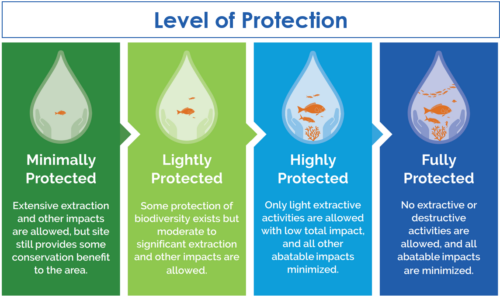
Figure 4. The MPA Guide identifies four different levels of protection for MPAs, each of which provide different levels of benefits. Source: The MPA Guide.
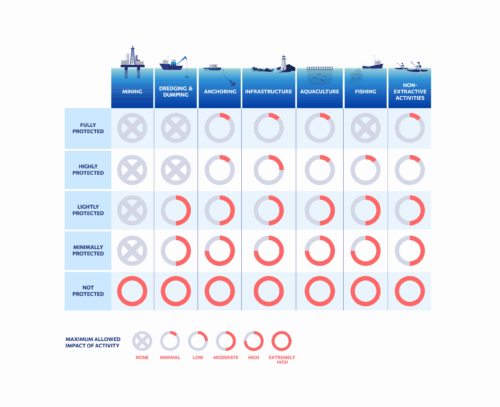
Figure 5. Level of protection based on maximum allowed impact of seven potential activities in MPAs. Source: Authors. Adapted from: Grorud-Colvert et al. 2021 with permission from American Association for the Advancement of Science.
This MPA Handbook focuses on guidance for creating MPAs that are highly and fully protected from human impacts. When we refer to benefits from MPAs in the sections below, this is what “MPA” means. When designed and managed well, with effectiveness and equity taken into account from the beginning, highly and fully protected MPAs are those that can bring the highest benefits for nature and people (Figures 6-7).2
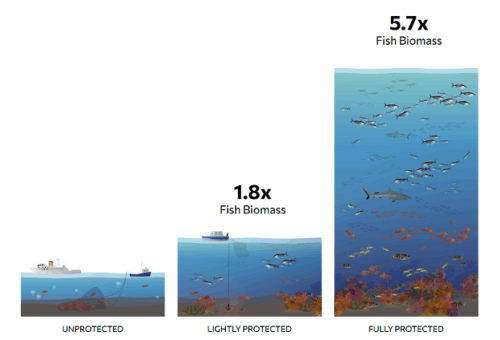
Figure 6. Expected MPA outcomes based on level of protection. Source: Authors.
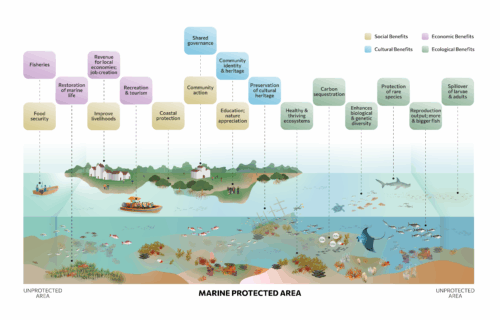
Figure 7. MPAs provide a number of benefits for both people and nature. Source: Authors.
Citations
- Turnbull, J. W., Johnston, E. L. & Clark, G. F. Evaluating the social and ecological effectiveness of partially protected marine areas. Conservation Biology 35, 921–932 (2021). https://doi.org/10.1111/cobi.13677
- Grorud-Colvert, K. et al. The MPA Guide: A framework to achieve global goals for the ocean. Science 373, eabf0861 (2021). https://doi.org/10.1126/science.abf0861