What Is Shifting Baseline Syndrome — And Why It Matters for the Ocean
Every generation inherits a different ocean, each one a little more diminished, unless we remember what once was and act to revive it. What will we pass on?
Our Sea in a Lifetime, Episode 1 featuring Enric Sala, Director of National Geographic’s Pristine Seas.
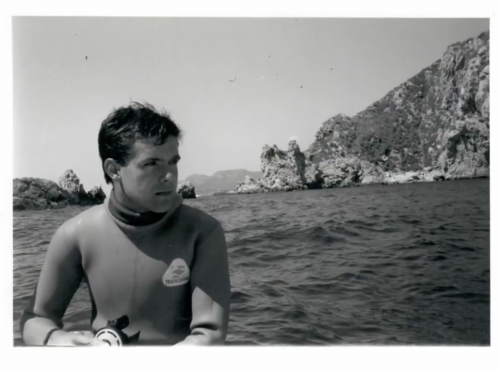
Enric Sala, National Geographic Explorer in Residence and founder of Pristine Seas, grew up on the Mediterranean coast of Spain, spending summers in the sea. He watched Jacques Cousteau documentaries and dreamed of exploring the ocean. But as he grew up, something felt wrong. The sea of his childhood was quiet and empty. He didn’t know why because he had never seen anything different.
Select footage courtesy of National Geographic Pristine Seas and Open Planet
That changed the day he dove at the Medes Islands Marine Reserve off the Costa Brava. As his bubbles cleared, the ocean floor came alive. Groupers, scorpionfish, octopus, seabass, rays — all missing from the sea he had grown up in — were thriving in one place. It was, he says, like diving into a Jacques Cousteau documentary.
That dive changed his life because he realized the emptiness he had always known wasn’t normal. It was the result of centuries of indiscriminate fishing and a phenomenon called shifting baseline, or “intergenerational amnesia”: the trap where each generation inherits a diminished ocean and mistakes it for the way things have always been.
Today, 90% of the large fish in the ocean are gone. More than three-quarters of the world’s fish populations are overfished, collapsed, or pushed to the limit. But Enric has also seen the other side, places that went from degraded to thriving, ecosystems that came back to life within a decade when left alone.
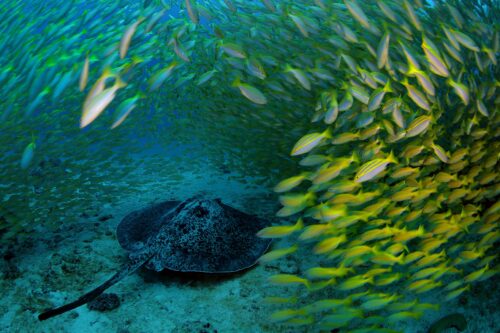
Photo by Manu San Félix/National Geographic Pristine Seas
A lifetime is long enough to witness profound loss. But within just a decade, we can bring the ocean back to life.
Our Sea in a Lifetime is a new series from Revive Our Ocean (coordinated by Dynamic Planet): exploring our ocean then, now, and what it could become if we protect it. Follow along as we hear from elders who remember seagrass meadows thick as carpets, fishers who recall nets heavy with fish, and scientists who have watched the ocean breathe back to life.