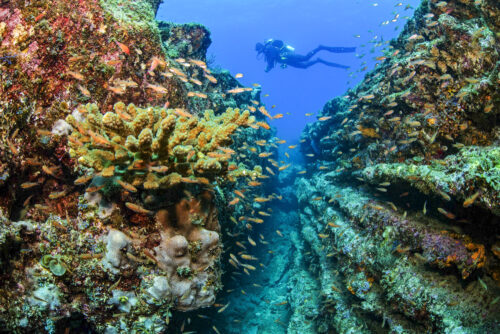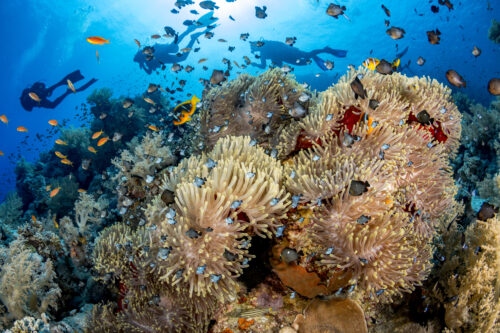
As global leaders from government, business, civil society, and science gather this week in Davos for the World Economic Forum Annual Meeting, under the theme “A Spirit of Dialogue,” we want to remind government and business leaders of a simple truth: the environment underpins our economic prosperity and social systems.
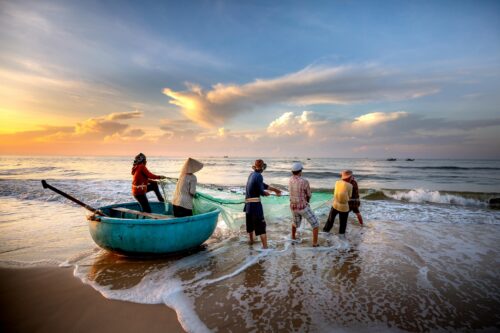
2025 was marked by geopolitical tension and economic uncertainty, with a lack of focus and even abandonment of critical environmental issues. As global leaders from government, business, civil society, and science gather this week in Davos for the World Economic Forum Annual Meeting, under the theme A Spirit of Dialogue, we want to remind government and business leaders of a simple truth: the environment underpins our economic prosperity and social systems.
Through our work of scaling community-driven marine protection on the world’s coasts, Revive Our Ocean offers practical answers to Davos’s five defining questions.

When communities take the lead
As trust in public institutions declines, local communities are stepping up to protect their coastlines, livelihoods, and future. Around the world, grassroots collaboration is proving that shared stewardship of the ocean works—not just ecologically, but socially and economically. When seeking examples of cooperation, we see success stories emerging from local communities around the world.
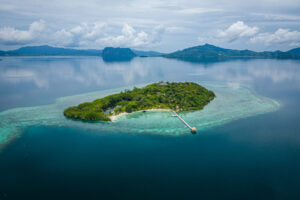
Take the Shark Fin Bay Marine Protected Area Network in the Philippines. In 2016, an MPA around Pangatalan Island was established, including a small no-take zone where fishing and other extractive activities were prohibited. The results were spectacular and inspired neighboring communities to create additional fully protected MPAs, eventually forming the Shark Fin Bay MPA Network.
Thanks to strong community leadership and engagement, marine life is thriving: sea turtles, dugongs, and the Napoleon wrasse have returned. Fishers are noticing more and bigger fish, including grouper and snapper, just outside the protected zones.
When local actors lead, cooperation is no longer abstract—it’s happening in communities and in the water, every day. Revive Our Ocean works with partners to harness the power of community-driven protection, boost collaboration, and scale coastal conservation worldwide.
Creating the conditions for local action
We have overfished our global ocean. Right now, only 3% of the ocean is fully protected, that is, 97% of it is opened to fishing. If we are not careful, we will overfish our ocean to bankruptcy. How do we make sure this does not happen?
When the ocean is fully protected from extractive activities, it rebounds faster than we ever imagined—and communities feel the benefits. Healthier fisheries. More tourism. Stronger local economies.
In effective marine protected areas (MPAs), ocean life bounces back miraculously, often in as little as a few years, replenishing marine life, leading to tourism inside the reserves and better fisheries outside. MPAs are like savings accounts with a principal set aside that grows with compound interest and produces returns year after year.
So if reviving the ocean is so clearly good for nature, people, and business, why isn’t it happening everywhere? One big reason: policy barriers. In many countries, only national ministries can establish MPAs, which makes the process slow, cumbersome, and hard to scale. But when the conditions for local action are in place, marine protection—and its benefits—can move much faster.
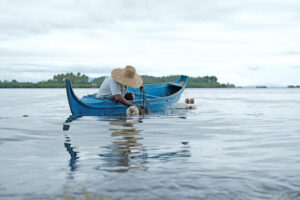
Let’s look again at the Philippines. In the 1980s, authority over municipal waters (0–15 km from shore) was shifted to local governments. This gave communities the power to regulate fishing, create MPAs, and enforce coastal laws themselves. The results? Almost 2,000 locally managed MPAs were established. Co-management models thrived. Decisions became faster and more legitimate—because they were led by the people who rely on the ocean every day.
Revive Our Ocean is helping advance policy reform and enable clear pathways for scaling effective MPAs, working alongside local leaders, organizations, and movements to fast-track community-driven proposals to unlock new, regenerative sources of ecological, social, and economic growth.
Supporting proven leaders: the Revive Our Ocean Collective
In times of uncertainty, progress comes from listening to and investing in the people whose vision and relentless leadership are already delivering proven results. The Revive Our Ocean Collective is precisely that group—leaders and organizations who have already created effective coastal MPAs through the trust of local communities, proving that coastal protection works.
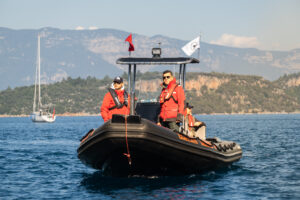
To shape the Collective, Dynamic Planet interviewed managers of 30 successful coastal MPAs across 10 countries. Despite very different local contexts, the same ingredients for success of effective marine protection emerged: strong local leadership, government support, innovative funding, and science-based management. These insights guided the selection of Collective members and the support they receive as we build a leading global community of practice together.
The Collective is part of Revive Our Ocean to help others replicate what works. By bringing together proven teams from different regions and models, it creates a space for shared learning and peer leadership—so experienced practitioners can guide new communities in creating and managing MPAs. The leaders we work alongside in the Collective inspire us every day, showing what’s possible when we invest in effective, trusted leaders.
To effectively scale, conservation must finance its own future
For decades, Dynamic Planet, co-founder and coordinator of Revive Our Ocean, has worked to ensure conservation has a business plan and businesses have conservation plans, grounded in the understanding that healthy ecosystems underpin our economies. Well-managed MPAs are among the best examples of “businesses that restore nature,” forming part of conservation economies that benefit people, nature, and climate.
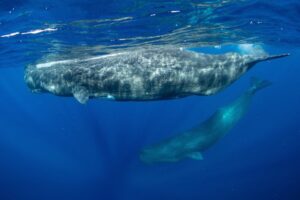
Yet fully protected areas remain rare. Too often, MPAs are seen as a luxury or a cost, rather than an opportunity to manage and reinvest as ongoing conservation businesses. Revive Our Ocean is innovating marine protection by approaching it through a business lens from the start. No-take MPAs should be designed as regenerative businesses and considered essential coastal infrastructure—like ports, roads, or hotels—supporting healthy ecosystems, strong local economies, and resilient communities. As marine life recovers, it drives real economic returns: ecotourism inside the reserve grows, access fees generate revenue, fish spillover outside the reserve boundaries to replenish fishing grounds, and emerging ecosystem markets open new opportunities.
Scaling conservation requires solutions that fit local realities, capacity, and ambition. REVIVE works with partners to strengthen financial sustainability, build organizational capacity, and create pathways for growth. Innovation should be paired with long-term thinking, showing how protection can pay for itself while reviving ocean life for generations to come.
Prosperity through protection
The planetary boundaries framework, developed by 28 scientists led by Johan Rockström at the Stockholm Resilience Centre, identifies nine Earth-system processes that together define a “safe operating space” for humanity. Today, scientists estimate that seven of these boundaries—including climate change, biodiversity loss, land-system change, freshwater depletion, nitrogen and phosphorus flows, novel entities like chemical and plastic pollution, and ocean acidification—have already been breached. Humanity’s long-term prosperity depends on restoring balance between our societies and the Earth systems that sustain them.

For our ocean, the stakes are clear: 3 billion people rely on the ocean for food, 40% of us live on coastlines, and 70% of marine biodiversity exists in coastal waters. The most powerful tool we have to revive marine life while directly benefiting coastal communities are marine protected areas (MPAs). MPAs support fisheries, ecotourism, and livelihoods for the people who depend on them. To meet the global goal of protecting 30% of the ocean by 2030, Dynamic Planet found that we need 188,000 highly protected MPAs—roughly 85 per day. Currently, only 9% of the ocean is protected, and just 3% is highly protected.
By scaling effective MPAs, we can rechart humanity’s course, restoring balance between our societies and Earth’s life-support system: the ocean. Revive Our Ocean believes in treating nature as a partner, not a resource to extract, allowing both ecosystems and people to thrive—a true win-win-win for life, livelihoods, and long-term prosperity.
Author: Kristin Rechberger is founder and CEO of Revive Our Ocean, coordinated by Dynamic Planet, and Executive Producer of Ocean with David Attenborough. As a 2009 Young Global Leader of the World Economic Forum, she has had the great fortune of attending Davos over the years.