As business, policy, and finance leaders convene for this year’s World Ocean Summit, we need to move beyond platitudes to urgent action and measure results in the water. If we are serious about building a resilient ocean economy, we must recognize a simple truth: nature is our best business partner.
As business, policy, and finance leaders convene for this year’s World Ocean Summit, we need to move beyond platitudes to urgent action and measure results in the water. The High Seas Biodiversity Treaty (BBNJ) has been ratified. The WTO Fisheries Subsidies Agreement should start to reshape global seafood supply chains. Yet new science warns we have breached the planetary boundary for ocean acidification. At the same time, philanthropic and financial capital is flowing into the “blue economy.” The question is no longer why act — it is how.
Amid the focus on blue bonds, digital twins, AI modeling and blended finance, one of the most powerful ocean investments remains chronically undervalued: fully protected (no-take) coastal marine reserves (MPAs). MPAs are not just conservation tools; they are essential coastal infrastructure, capable of delivering measurable ecological and economic returns when designed and managed well.
If we are serious about building a resilient ocean economy, we must recognize a simple truth: nature is our best business partner.
Marine Protection as Essential Infrastructure
We often discuss MPAs as environmental or regulatory tools, but their role in delivering multiple returns is frequently overlooked. Properly designed no-take reserves:
The math is compelling. Research consistently shows that every $1 invested in effective marine protection can generate up to $10 in economic return through fisheries productivity, tourism revenue and associated employment. These are returns that reach beyond the ecological sphere, into the financial and social, making MPAs a true asset that benefits coastal communities and businesses. Therefore, MPAs should be considered essential coastal infrastructure in the same way as ports and roads.
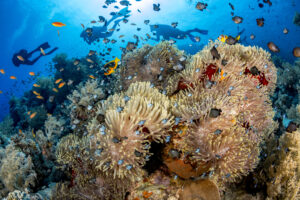
One workshop at this year’s Summit, supported by Iberostar, asks a timely question — one that sits at the heart of our new initiative, Revive Our Ocean: how do we accelerate MPA implementation, moving from commitments to on-the-water delivery?
Co-founded by Dynamic Planet, which has spent years building conservation economies around the world, Revive Our Ocean advances a model for coastal prosperity grounded in a simple principle: design marine protection as a regenerative business from the start.
We know that scaling and accelerating meaningful marine protection does not happen through designation alone. It happens when protection makes economic sense locally. MPAs stop being external mandates and start becoming shared assets.
If the World Ocean Summit is asking how to accelerate implementation, the evidence points to a clear answer: protect ecosystems first, design for local economic return, and align tourism, fisheries, and finance around ongoing regeneration for local communities to benefit and reinvest in their marine businesses that rely on marine life.
When protection becomes productive, demand, and ultimately acceleration, follows.
One of the most overlooked mechanisms in marine finance conversations is the spillover effect.
When fishing is prohibited inside a no-take reserve:
The result? Higher catch per unit effort, greater ecological resilience, and increased fisher income. In other words: effective no-take zones are a risk mitigation strategy for fisheries-dependent economies.
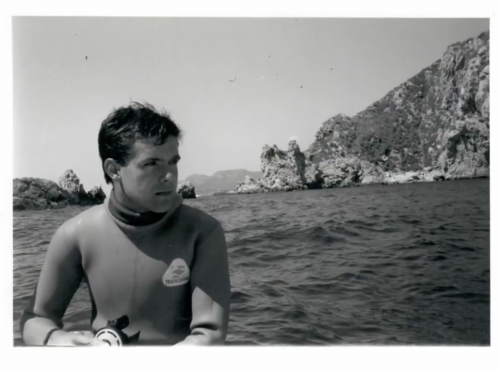
In Spain’s Medes Islands Marine Reserve, a no-take zone of just 1 km² has been delivering outsized returns since 1983.
The annual cost to manage the reserve now is approximately €2 million. The annual return is roughly €16 million in direct tourism revenue, alongside more than 250 tourism-related jobs and improved fisheries in surrounding waters.
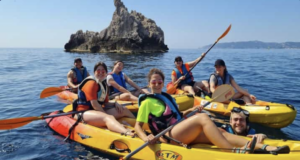
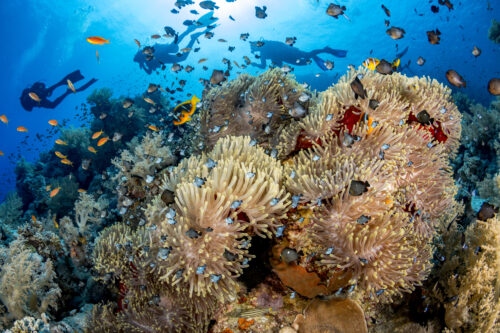
Divers and tourists come because there is vibrant life inside the reserve. Fishers benefit because biomass rebounds and spills over outside the reserve. The reserve functions as a living savings account, with ecological capital compounding year after year.
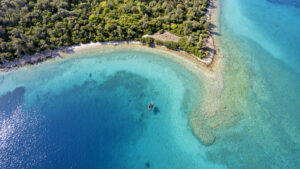
A similar story unfolds in Gökova Bay, Türkiye. Since establishing its no-take zones in 2010, fish biomass has increased significantly, and local fisher income has risen by 400%.
Protection did not eliminate livelihoods. It strengthened them.
When communities are involved in design and enforcement, marine protection becomes a regenerative economic strategy.
At the World Ocean Summit, discussions often focus on trade-offs: what sacrifices must governments, industries, and communities accept to protect ocean health? Revive Our Ocean reframes the question: what are we sacrificing by not protecting our oceans effectively?
Declining fish stocks, food insecurity, reduced tourism appeal, higher insurance risks, and economic instability in coastal communities are the real costs of inaction. Properly managed MPAs, by contrast, generate ecological and economic resilience, proving that protection and productivity are not opposing forces — they are mutually reinforcing.
At Revive Our Ocean we are accelerating the creation of coastal MPAs designed as regenerative businesses from the outset — ensuring that conservation delivers economic returns, strengthens livelihoods, and protects the ocean for future generations.
As the global ocean community gathers for this year’s World Ocean Summit, we want to share a clear message: invest in protection first, and the returns—for both people and the planet—will follow.
Because in the end, the most reliable return in the blue economy comes from allowing nature to rebuild itself.
And that is an investment the market cannot afford to overlook.
Author: Kristin Rechberger is founder and CEO of Revive Our Ocean, coordinated by Dynamic Planet, and Executive Producer of Ocean with David Attenborough. As a 2009 Young Global Leader of the World Economic Forum, she has had the great fortune of attending Davos over the years.